Independent · no affiliate links · no rankings that expire
AI coding agents, explained without the hype
Three things get called AI coding tools and only one of them is an agent. The difference is not model quality. It is whether the thing can take an action, look at what happened, and decide what to do next.
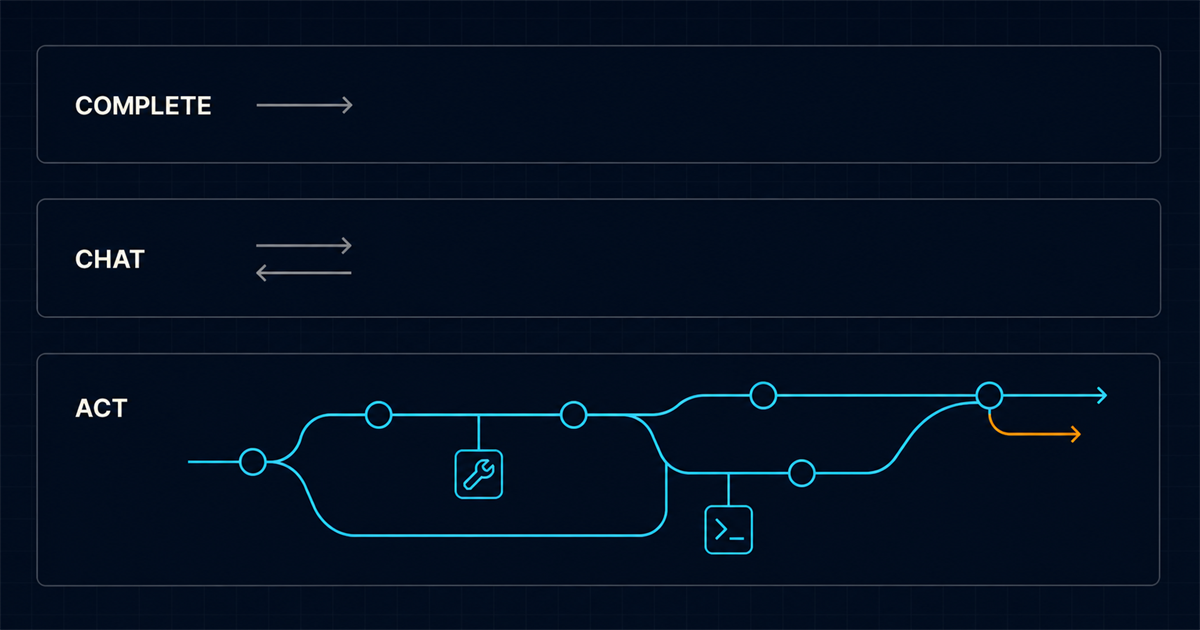
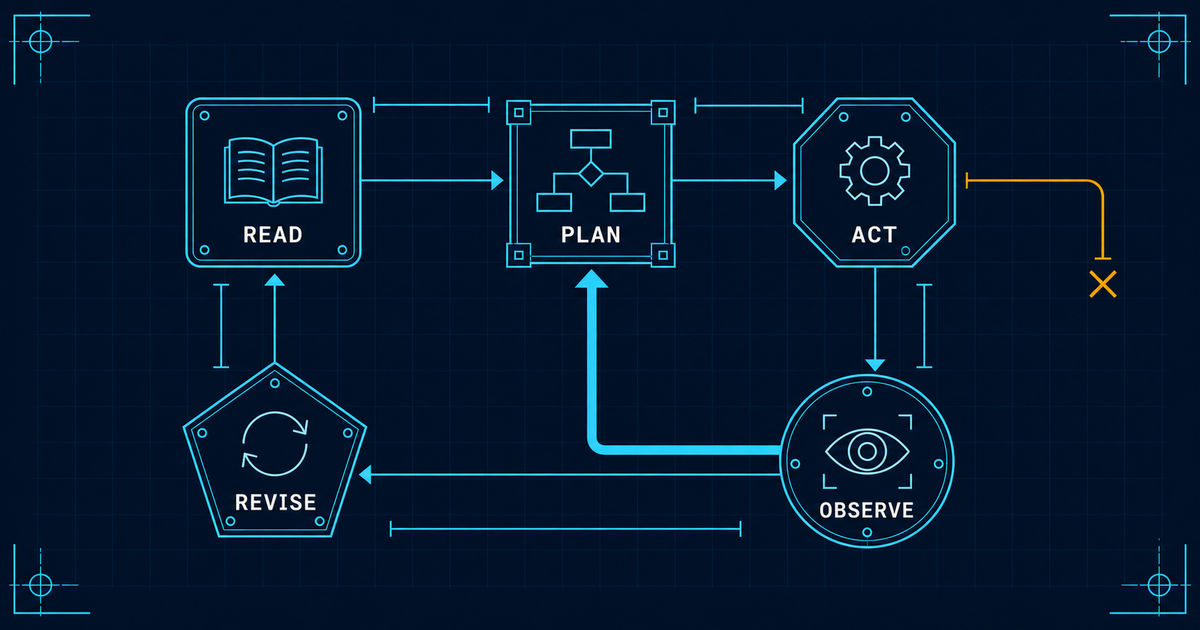
Short answer: an agent runs a loop. It reads context, plans, calls a tool, observes the result and revises. Autocomplete cannot observe. A chat assistant loops through you. An agent closes the loop itself, which is why it can finish a task and also why it can be confidently wrong for four minutes without anybody noticing.
Start with these three
The pillar, the comparison, and the one change that improves output more than switching tools ever will.
What an AI coding agent actually is
Completion, chat, agent. The five-step loop every agent runs, and why the jump to the third tier is a change in kind rather than degree.
The best agents, by what they are for
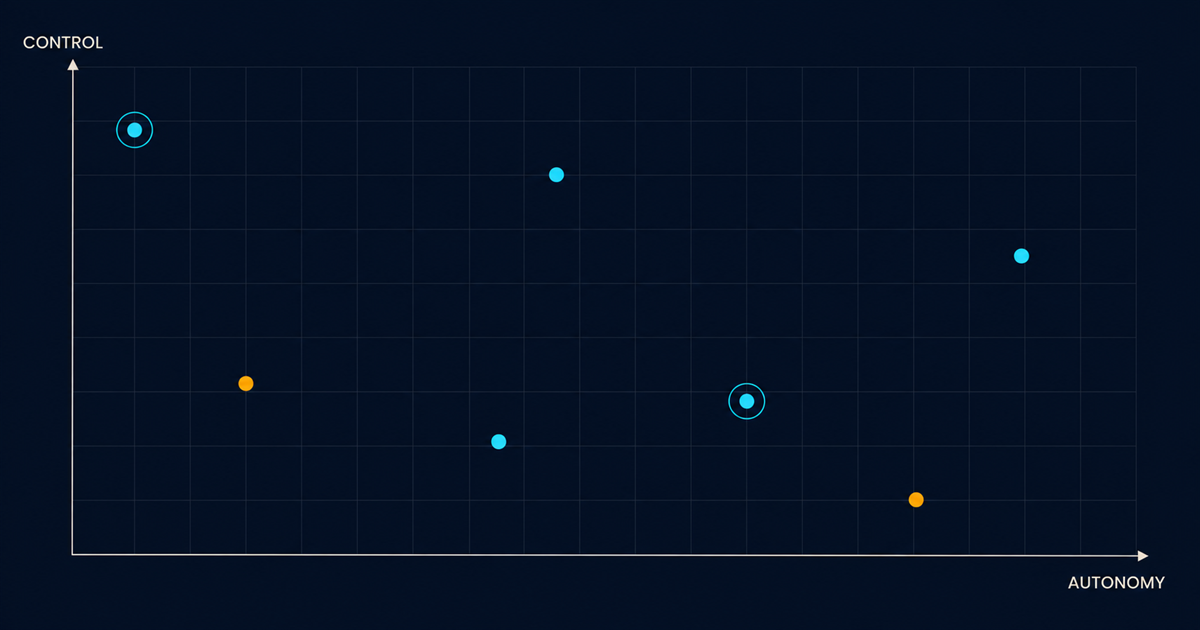
Four durable shapes of tool instead of a numbered ranking, and the one question that tells you which shape you are.

Writing an instruction file agents follow
Sixty good lines beat four hundred vague ones. What belongs in AGENTS.md, what to delete, and what a bloated file costs you.
Six threads, twelve guides
Every guide answers a question somebody actually types, and every external link in them was fetched and checked before it was cited.
Fundamentals
How the loop works, and why context management rather than model quality decides most of what you get.
Comparisons
Claude Code, Cursor, Copilot, Codex and the rest, sorted by shape and by where each one is the wrong answer.
Workflow
Instruction files, and the terminal-versus-editor split that decides how much of your work you can hand over.
Code Quality
Reviewing code whose author cannot explain it, and verifying work when plausibility stopped being evidence.
Operations
Permissions and blast radius, secrets, prompt injection, and where the tokens actually go when the bill surprises you.
Integrations
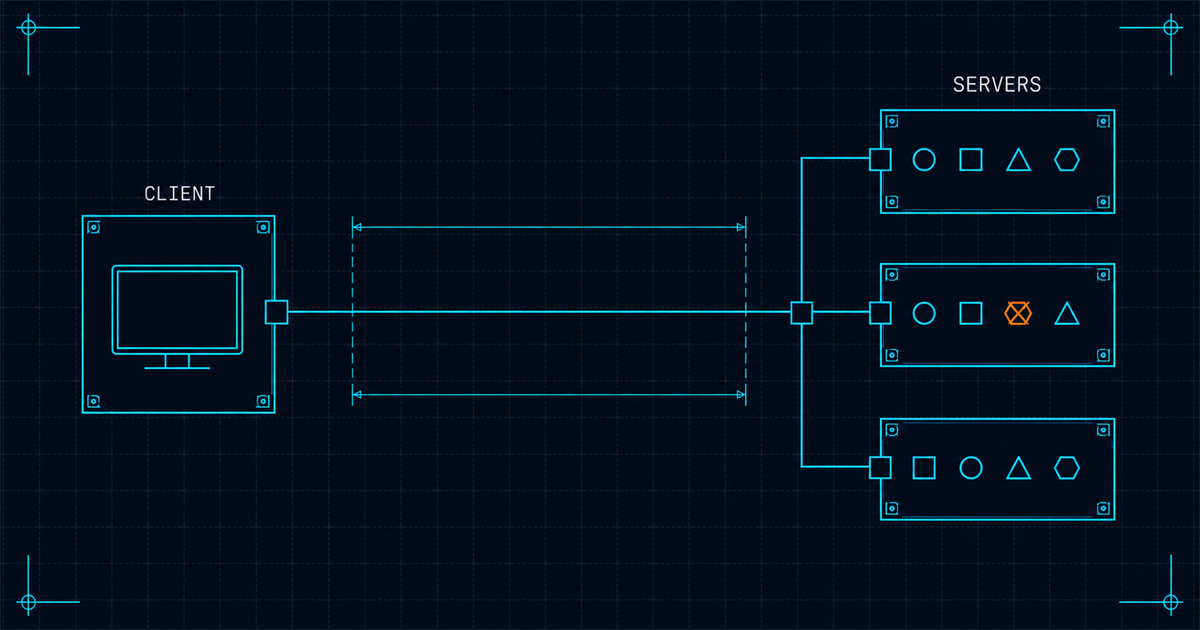
MCP and what it does not solve, plus the infrastructure your agent quietly commits you to on the first build.
What you will not find here
This category is full of content that exists to sell something. Four things we leave out on purpose, because they are the fastest way to stop being worth reading.
Numbered rankings
A format that guarantees being wrong within a quarter.
Benchmark verdicts
They measure something real, usually not your workload, and they get optimised against.
Pricing figures
They change. We link each tool’s own pricing page instead.
Prompt libraries
A prompt that works this month is not knowledge.

Who writes here
Six people, each holding a standing beat rather than a byline invented per article. The post you read about permissions was written by the person who writes about permissions every time.
Most complaints about agents are context complaints
An agent cannot see what you did not give it, does not know your conventions unless they are written down, and does not remember last session. Written conventions and a test suite it can run will change your results more than switching tools will.